

Keeping household floors consistently clean can become surprisingly demanding when dust, crumbs, hair, footprints, and small particles return throughout the day. The problem is rarely one difficult cleaning session. Instead, it is the repeated attention that floors require in kitchens, hallways, living rooms, dining areas, and other frequently used spaces. Modern aspirateur robot systems are designed to address this repetitive workload by bringing autonomous movement and floor cleaning into a single routine. Rather than waiting for a person to manually vacuum whenever dirt becomes noticeable, robotic cleaning allows routine maintenance to happen more frequently and with less direct involvement.
The category has also changed considerably from the early generation of simple robotic vacuums. Current systems can combine vacuuming, wet cleaning, intelligent navigation, obstacle handling, automatic dust management, mop maintenance, and docking functions. Narwal’s French range reflects this development with products across its Flow, Freo Z, Freo X, and Freo S families, as well as accessories designed to support different cleaning and maintenance requirements. The company positions its robot vacuum and mop systems around a combination of floor cleaning and automated care, illustrating how the modern product is becoming a complete floor-maintenance platform rather than simply a small automated vacuum.
This broader approach makes the buying decision more complicated, but also more useful. Suction remains relevant, yet it is only one part of the experience. Navigation determines how effectively the robot moves around furniture, brush construction affects hair management, mopping technology influences hard-floor cleaning, and the docking station can determine how much maintenance the owner still has to perform. Looking at these elements together provides a better understanding of what robotic floor care can actually contribute to a modern home.
Navigation That Works Around Real Household Obstacles
A robotic cleaner operates in an environment that is rarely predictable. Chairs may be moved, doors can be open or closed, furniture creates narrow gaps, and everyday objects can change the available floor space. Effective navigation helps the robot understand these conditions and select appropriate routes instead of repeatedly following an inefficient path.
This becomes particularly important when cleaning several rooms. A system needs to maintain awareness of its surroundings while moving between different spaces and returning to its docking station when required. Narwal highlights intelligent navigation across its robotic cleaning range, making movement and environmental awareness an important part of its overall approach to automated floor care.
From Dry Debris Collection to Multi-Stage Floor Care
Traditional vacuuming primarily deals with loose particles such as dust, crumbs, and hair. Mopping addresses another category of dirt, including marks and residue that remain attached to hard surfaces. Combining these functions allows a robotic cleaner to approach everyday floor maintenance more comprehensively.
Narwal’s French collection includes dedicated robot vacuum-mop systems alongside its other robotic products, showing how manufacturers are increasingly separating simple vacuuming from broader floor-care solutions. For households with substantial hard-floor areas, this combination can reduce the need to manually switch between vacuuming and mopping as separate chores.
Roller-Based Washing Brings a Different Cleaning Concept
One of the notable developments in robotic floor care is the introduction of roller-style washing systems. Instead of using a smaller rotating mop arrangement, a roller can provide a larger continuous cleaning surface that remains in contact with the floor while the robot moves.
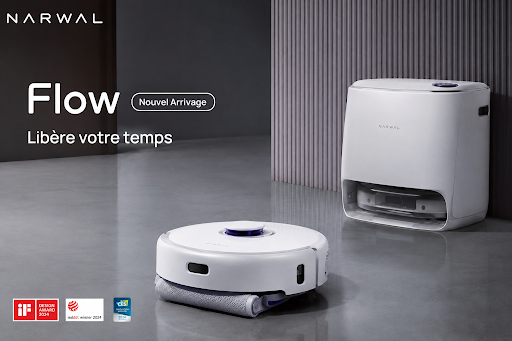
Narwal’s Flow system uses a roller-based floor-cleaning mechanism and describes continuous water supply alongside a large cleaning surface. The company also states that the system applies constant pressure while cleaning and is designed to reach close to edges. These characteristics show how modern robotic mopping is evolving from an added feature into a more deliberately engineered cleaning mechanism.
Automatic Mop Maintenance Reduces Repetitive Chores
Wet cleaning creates a problem that ordinary vacuuming does not: the cleaning component itself becomes dirty. If the mop is not properly maintained, the robot’s ability to provide consistent cleaning can be affected. Automated mop washing and drying can therefore make a substantial difference to the ownership experience.
Narwal’s French product range describes automatic maintenance functions for its robotic systems, with different models offering different combinations of mop cleaning, drying, dust collection, and other station-based functions. This means the docking station can become an active part of the cleaning process rather than simply a place where the robot charges.
Brush Design Matters for Hair and Pet Debris
Dust and crumbs can generally be collected through suction and brushing, but hair presents another challenge. Long hair and pet fur can wrap around rotating components and eventually require manual removal. This can become particularly noticeable in households where shedding is frequent.
Narwal’s current French product information includes anti-tangle brush solutions designed for its robotic systems. Its Flow product, for example, uses a hybrid brush design combining nylon and rubber elements and describes the system as being developed to collect dirt while reducing hair and pet-hair tangling. Brush engineering can therefore have a direct impact on how much maintenance a household performs between cleaning cycles.
Floor Surfaces Influence the Right Configuration
A home may contain several different flooring materials, and each surface can create a different cleaning requirement. Smooth hard floors, textured tiles, rugs, and carpets do not necessarily respond to the same cleaning method. A machine that is ideal for one surface may not provide the same results across every part of a mixed-floor home.
This is why consumers should consider their actual floor distribution before choosing a model. Narwal’s French buying information points to factors such as surface type, household size, pets, suction, washing performance, navigation, and automatic maintenance when comparing robot cleaners. Such a broader evaluation can prevent buyers from choosing a system based only on one attractive specification.
Furniture Density Can Affect Cleaning Coverage
Furniture is one of the biggest practical challenges for any autonomous floor cleaner. Table legs, chairs, sofas, beds, cabinets, and other objects create spaces that require careful navigation. The physical dimensions of the robot also determine whether it can access certain areas beneath furniture.
An open-plan room may be relatively straightforward to clean, while a heavily furnished home can require considerably more navigation. This does not make robotic cleaning unsuitable, but it does make environmental compatibility important. Buyers should think about where dirt actually collects and whether their preferred machine can physically reach those areas.
The Docking Station Has Become Part of the Product
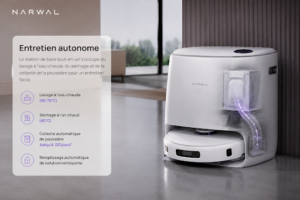
The docking station can have a significant influence on how much work the owner performs. Charging is only its basic role. Depending on the model, the station may also collect dust, clean mops, dry components, manage water, and prepare the robot for its next cycle.
Narwal’s French product information highlights station-based functions including automatic dust collection and mop maintenance across its robotic cleaning range. For this reason, comparing the robot alone can give an incomplete picture of the actual ownership experience. The robot and its station should be considered as one system.
Selecting a robot aspirateur laveur for Different Homes
A robot aspirateur laveur can be particularly valuable when a household needs both dry debris collection and regular wet floor cleaning. Instead of treating these as two separate tasks, the combined system can integrate them into a broader routine. This is especially relevant for homes where hard floors make up a large proportion of the available surface.
The ideal configuration still depends on the property. A compact apartment, a large family home, a pet-owning household, and a property containing multiple flooring materials can have very different requirements. Narwal’s French range includes several product families and configurations, giving consumers different approaches to automated floor maintenance.
Automatic Dust Handling Changes Daily Maintenance
One of the advantages of a modern docking system is the ability to reduce the frequency of manual dust disposal. Instead of requiring the owner to empty a small onboard container after every cycle, compatible systems can transfer collected debris to a larger station-based container.
This matters particularly for homes where the robot operates frequently. Less frequent emptying can make the machine easier to incorporate into an everyday schedule. However, dust bags and other consumables remain part of long-term ownership, so buyers should consider availability and compatibility before purchasing.
Replacement Components Are Part of Long-Term Ownership
Robotic cleaning systems contain parts that naturally experience wear. Brushes, mop components, filters, dust bags, and other accessories may eventually need replacement depending on usage and model. A machine’s long-term practicality therefore depends partly on whether compatible components remain readily available.
Narwal’s French store currently lists replacement products including dust bags, cleaning solutions, mop components, side brushes, and different brush systems for its robotic models. Checking compatibility is important because accessories are not necessarily interchangeable across every product family.
A Practical Comparison Before Purchase
Consumers can narrow their options by evaluating the complete cleaning system rather than focusing on one specification.
- Floor types throughout the home
- Vacuuming requirements
- Mopping requirements
- Pet hair and long hair
- Furniture density
- Navigation capabilities
- Obstacle handling
- Dust management
- Mop washing and drying
- Water management
- Docking-station size
- Replacement accessories
- Cleaning solution requirements
- Expected maintenance
This approach helps match the technology to actual household needs. Someone living in a smaller home with mostly hard flooring may prioritize compact design and simple maintenance, while a larger household may place greater importance on navigation, coverage, automatic station functions, and pet-hair management.
Routine Automation Does Not Eliminate Every Cleaning Task
Robotic floor cleaners are designed to automate repetitive floor maintenance, not every form of household cleaning. Stairs, furniture surfaces, cluttered areas, deep stains, and unusual spills can still require manual attention.
The important distinction is between eliminating cleaning completely and reducing the repetitive work involved in maintaining floors. A robot that regularly handles ordinary dust, crumbs, hair, and surface dirt can reduce the number of times homeowners need to perform those tasks manually.
Final Thoughts
The modern robotic cleaner is becoming much more than an automated vacuum. Navigation, brush engineering, wet-cleaning mechanisms, automatic dust management, mop maintenance, and intelligent docking systems are increasingly being combined into a single floor-care ecosystem. Narwal’s current French range demonstrates this direction through multiple product families, while technologies such as the Flow roller system illustrate how manufacturers are experimenting with the physical process of floor washing itself.
For homeowners, the most useful approach is to judge a robotic cleaning system according to the actual conditions of the home. Floor materials, furniture, pets, hair, room layout, cleaning frequency, and expectations around maintenance all influence which features matter most. A machine with impressive specifications may not necessarily be the best choice if its cleaning method, dimensions, or maintenance system does not match the property.
The broader value of robotic floor care comes from consistency. Instead of waiting until floors become visibly dirty and then spending time completing several cleaning stages, homeowners can use automation to maintain everyday surfaces more regularly. As navigation, washing technology, brush design, and automatic maintenance continue to develop, robotic cleaners are becoming increasingly capable of handling the repetitive parts of floor care while leaving people with more time for the tasks that genuinely require their attention.
Frequently Asked Questions
Can a robot vacuum also wash floors?
Yes. Robot vacuum-mop models are specifically designed to combine dry debris collection with wet floor cleaning. The exact washing mechanism, water management, and maintenance functions vary between models.
Are robot vacuum-mop systems suitable for homes with pets?
They can be useful in pet-owning households because they can handle recurring hair and debris. Brush design is particularly important, as hair can become wrapped around conventional rotating components.
Do robotic cleaners work on different types of flooring?
Many systems are designed to operate across multiple floor types, but performance and appropriate cleaning settings can vary. Buyers should check the manufacturer’s recommendations for their particular combination of hard floors, carpets, rugs, and other surfaces.
Does the docking station need maintenance?
Yes. Even automated stations require periodic attention. Dust containers, water tanks, mop components, cleaning areas, and consumables may need inspection or replacement depending on the system.
Do robotic cleaners need replacement accessories?
Yes. Brushes, mop components, filters, dust bags, and cleaning products can require replacement over time. It is important to check that compatible components are available for the exact model.
Can a robot completely replace traditional cleaning?
No. Robotic systems are best viewed as tools for automating repetitive floor maintenance. Deep cleaning, stairs, furniture, heavy spills, and other specialized tasks may still require manual cleaning.